ADHD & Autism Assessments: Support Before, During and After
Exploring whether you or your child may be autistic, have ADHD, or be AuDHD can raise many questions and emotions. The information here is intended to support understanding of assessment options, what the process might involve, and how therapeutic support can help before, during, and after assessment.
There is no pressure to rush, no single “right” route, and no requirement to pursue a diagnosis in order to receive support.
HOW I CAN SUPPORT YOU
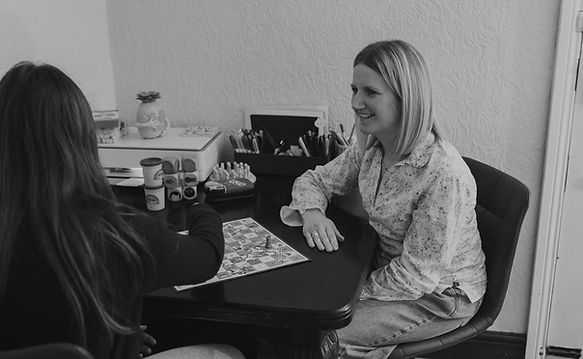
I work as a psychotherapist with adults, children, and families. I do not diagnose ADHD or autism. My role is to offer emotional and therapeutic support alongside the assessment process, if that feels helpful.
This may include:
• Exploring whether ADHD, autism, or AuDHD feels relevant to lived experience
• Supporting emotional wellbeing before, during, and after assessment
• Talking through assessment pathways and what to expect
• Helping parents think about how to talk with their child about assessment
• Supporting understanding, identity, and emotional processing following an outcome
• Answering general questions about ADHD, autism, and neurodivergence
UNDERSTANDING ADHD, AUTISM, AND AUDHD
ADHD and autism are neurodevelopmental differences that can affect attention, communication, sensory processing, emotions, relationships, and daily life. Some people identify with traits of both ADHD and autism, often referred to as AuDHD.
Formal assessments are based on recognised diagnostic frameworks such as DSM-5 or ICD-11, alongside clinical judgement and developmental history.
ASSESSMENT PATHWAYS IN THE UK
NHS Right to Choose (England)
Right to Choose allows patients in England to access ADHD and autism assessments through NHS-approved providers. These assessments are NHS-commissioned and generally treated as NHS diagnoses.
Standard NHS Referral
This involves referral to local NHS services. Waiting times can be long and vary by area.
Private Assessments
Private assessments are self-funded and carried out outside the NHS. While they can be clinically valid when completed by appropriately qualified clinicians, acceptance by NHS services or education settings can vary locally.
For this reason, I do not recommend specific private assessment providers and cannot guarantee whether a particular service will be recognised by the NHS for onwards care.
WHAT THE ASSESSMENT PROCESS MIGHT LOOK LIKE
Every provider works slightly differently, but many people experience something similar to the following. This is offered as a general guide and individual experiences will vary.
1. Initial contact, such as an enquiry form or phone call
2. Completion of questionnaires, often by the individual and someone who has known them for a long time
3. Clinical assessment, which may take place face-to-face, by video, or by phone
4. Feedback and outcome, shared on the day or later by letter or email, often with a written report
5. Discussion of next steps and recommendations
COMMON QUESTIONS
Will the diagnosis be recognised?
Assessments completed through NHS or Right to Choose pathways are generally recognised as NHS diagnoses. Private diagnoses can be clinically valid, but how they are accepted for onward NHS support can vary locally.
Do I need a diagnosis to access support?
No. Many people benefit from therapy without a formal diagnosis. Support can be meaningful regardless of assessment outcome.
Can ADHD and autism both be assessed?
Yes. Many people identify as AuDHD, and some assessment providers explore both ADHD and autism where appropriate.
What happens if diagnostic criteria are not met?
Not meeting diagnostic thresholds does not invalidate someone’s experiences. Support can still be helpful, and therapy can explore strengths, challenges, and next steps.
WORKING WITH SCHOOLS
Schools cannot make medical diagnoses, but they may support referrals and provide observations or reports. Support and adjustments do not require a diagnosis.
TALKING TO YOUR CHILD ABOUT ASSESSMENT
Many parents wonder how to talk with their child about the possibility of ADHD or autism. I can support parents to think through these conversations in a way that feels age-appropriate, gentle, and reassuring.
ABOUT MY APPROACH AND TRAINING
I care deeply about supporting neurodivergent adults and children to make sense of their experiences in ways that feel compassionate and grounded in everyday life.
Alongside my psychotherapy training, I hold a Postgraduate Certificate in Autism (Sheffield Hallam University, in partnership with the National Autistic Society). I am also an ADHD Coach, which complements my therapeutic work by supporting understanding of attention and executive functioning within a therapeutic framework.
FINAL NOTE
There is no requirement to rush and no expectation that diagnosis is necessary in order to receive support. If you have questions or would like support alongside the assessment process, you are very welcome to get in touch.